Partnership in Practice: Centering Community Voice
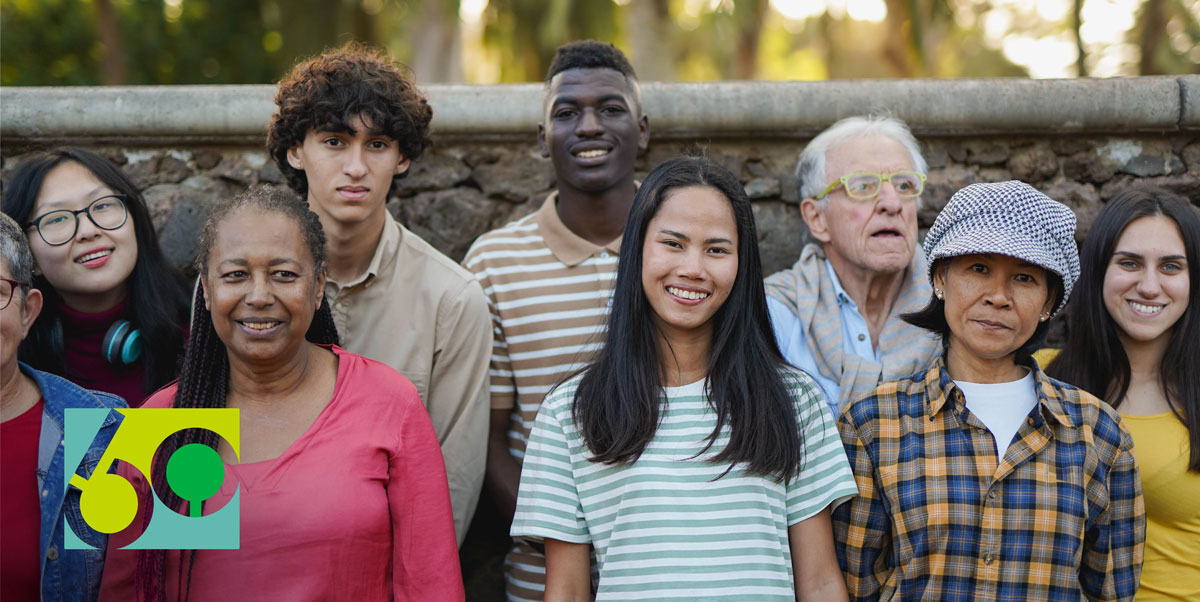
This post is part of Education Northwest’s 60 Years of Partnership series: an exploration of what meaningful, effective partnerships look like in practice and the possibilities they generate for education systems and the communities they serve.
As an education researcher and evaluator, I’ve engaged in dozens of projects that involved interacting directly with community members to get their feedback and perspective. Listening to community voice is one of the most powerful tools we have for designing systems, policies, and programs that actually work for the people they’re intended to serve.
As subject matter experts and researchers, we may come into a project thinking we know what works and what the goal is, but we also need to understand how that aligns with the goals of a given community: What do they value? What is important to them? What barriers are there to implementing this initiative in this community?
Only with this knowledge can we purposefully design actions that mitigate those barriers and move everyone toward a common goal. Let me give you an example.
A Shared Responsibility
In 2023–24, I was part of an Education Northwest team that partnered with the Oregon Department of Education (ODE) to help develop the Oregon Multilingual Learner Strategic Plan. This project had been in the works for nearly a decade and was set in motion by House Bill 3499, passed in 2015, which required ODE to develop a statewide school and district plan focused on improving outcomes for the state’s rapidly growing population of multilingual learner students.
From the beginning, ODE envisioned this work not as a legislative mandate but as a shared responsibility. The project team would work alongside students, parents, families, community members, educators, and policymakers across the state. Community voice would be front and center. This would not be ODE’s plan; it would be Oregon’s plan.
Among other responsibilities, our Education Northwest team was asked to facilitate multiple in-person focus groups and listening sessions in different regions of the state, as well as virtual focus groups that could reach an even wider audience. The goal was to get broad geographic and demographic representation and to engage participants in open and honest dialogue about the current state of multilingual learner programs and services and their vision for the future. Ultimately, we hosted more than 60 focus groups attended by more than 400 individual participants, and we administered a survey to educators and administrators that received 287 responses.
Trusted Partners
To make this happen, we engaged in multiple forms of partnership. First, we established an advisory board that served as the main vehicle for sharing content and getting feedback. We were able to leverage an existing statewide group, the English Language Advisory Board, that was already purposefully chosen to be representative of the multilingual learner community. This group included parents, community members, educators, and ODE staff members, which met four times over the 11-month process of input and drafting and finalizing the plan.
One way to center community voice is to create the right conditions. We partnered with local, trusted community organizations to recruit and engage participants and to host the in-person focus groups. These organizations were already providing a safe space for members of the multilingual community, and we could rely on them to initiate conversations and start the process of engagement, so we weren’t coming in as total strangers. This was also central to our approach: Go to the community instead of asking the community to come to us.
Multilingual learning intersects with many parts of the education system. For example, parts of the strategic plan address teacher recruitment. This meant speaking with the Teacher Standards and Practices Commission and institutions of higher education. We were able to draw on well-established relationships with these entities to get valuable input in a short time period.
The multilingual learner community is also very diverse. More than 250 languages are spoken across the Oregon public school system, and to ensure we were getting the broadest possible representation we turned to several local school districts that we have partnered with in the past.
These districts provided coordination and translation services that allowed us to hear from certain communities, such as Dari- and Russian-speaking communities in Beaverton, that might otherwise have had no voice in the final plan.
What Partnership Makes Possible
Centering community voice doesn’t mean leaving your professional knowledge and expertise at the door. It’s the combination of the two that makes the work possible and makes it better.
For example, during our community focus groups, we heard from quite a few parents who said, “We want our kids to learn two languages.”
While that sent a clear message about goals, it was not a specific action step we could put into a strategic plan. As researchers, we were able to translate that feedback into concrete actions.
In this instance, what we could say was: The state should invest in dual language programs, because we know from research that these programs help students develop their home language alongside English and have many other positive impacts on students’ academic achievement and social and emotional well-being.
The final Oregon Multilingual Learner Strategic Plan is deeply informed by community voice and is the product of many partnerships across the Oregon education system.
Ultimately, work that is rooted in evidence and informed by lived experience and practitioner knowledge is more likely to have widespread support, more likely to be put into practice, and more likely to have real impact on those it is intended to serve. This is what partnership makes possible.