Professional Learning at Scale: Developing eLearning for North Dakota’s Child Care Providers

High-quality early learning is the foundation of a successful future. Giving every child access requires preparing every early childhood professional with the knowledge and tools to effectively support children and their families.
Our instructional design team is tackling this challenge at a systems level by developing large-scale eLearning solutions tailored for child care providers. Working hand in hand with state agencies, we share highly technical information in an accessible, engaging way—one that reflects the realities of early childhood work and a workforce with wide-ranging backgrounds.
Recently we collaborated with the North Dakota Department of Health and Human Services to design and develop 13 self-paced eLearning courses for child care providers across the state. The courses cover a broad range of topics: technical licensing requirements, foundational child development principles, and best practices in care. They also address health and safety topics like safe sleep practices, creating safe environments, and ways to prevent injury and illness. In total, the course suite represents more than 80 hours of learning across three languages: English, Somali, and Spanish.
Designing for a Varied Workforce
Child care providers across North Dakota have a broad range of professional experience and linguistic backgrounds. They work in diverse settings—including center-based programs, licensed and unlicensed home-based care, preschools, and school-age child care—and have varied educational backgrounds. On a national level, between 22 and 37 percent of child care providers have a high school diploma or less, while 20 to 30 percent have a bachelor’s degree or higher. Creating high-quality professional development materials for this population of adult learners requires careful design and differentiated tools.
In North Dakota, our team took a learner-centered, research-based approach to address the varied learning needs of child care providers statewide. We began by working with the Department of Health and Human Services to assess providers’ needs, contexts, and existing knowledge. Based on these insights, we designed and built courses that meet learners where they are and help them grow their skills in meaningful, applicable ways.
Turning Complex Topics into Clear Learning
Early childhood education is a complex field. It includes everything from developmental science and health and safety practices to detailed regulatory requirements.
We worked closely with North Dakota subject matter experts and state partners to identify essential content, applicable laws, and policies to include in each course. Our instructional design team then translated the complex information into clear, engaging learning experiences by:
- Writing content at or around a grade 8 reading level and including important terms in course glossaries that users can access at any time.
- Including real-world case studies and realistic scenario-based activities, such as discussing safe sleep practices with a parent who wants their child to sleep with a pillow or extra layers of clothing—practices that do not align with American Pediatric Association recommendations.
- Dividing lessons into short, digestible sections with knowledge checks to confirm understanding. Each North Dakota course ends with a graded knowledge check, but we also added ungraded questions and moments of reflection throughout the courses so learners can reinforce new concepts before moving on to the next topic.
- Creating a visual design template for Storyline Development that uses consistent color palettes, accessible fonts, and intuitive layouts throughout all 13 courses to reinforce learning and reduce learner overload.
Each course combines narrated content with dynamic on-screen text or short videos, then reinforces learning through quizzes, scenario-based questions, or reflection activities that encourage providers to apply concepts directly to their child care setting.
Course Highlight: Emergency Preparedness
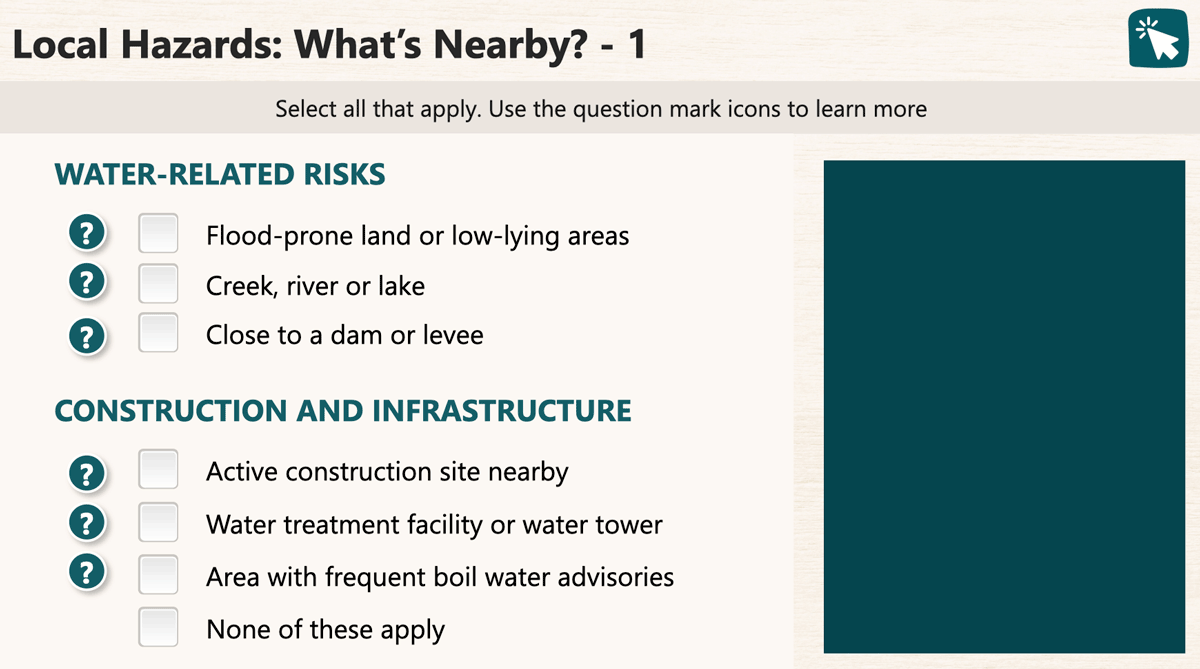
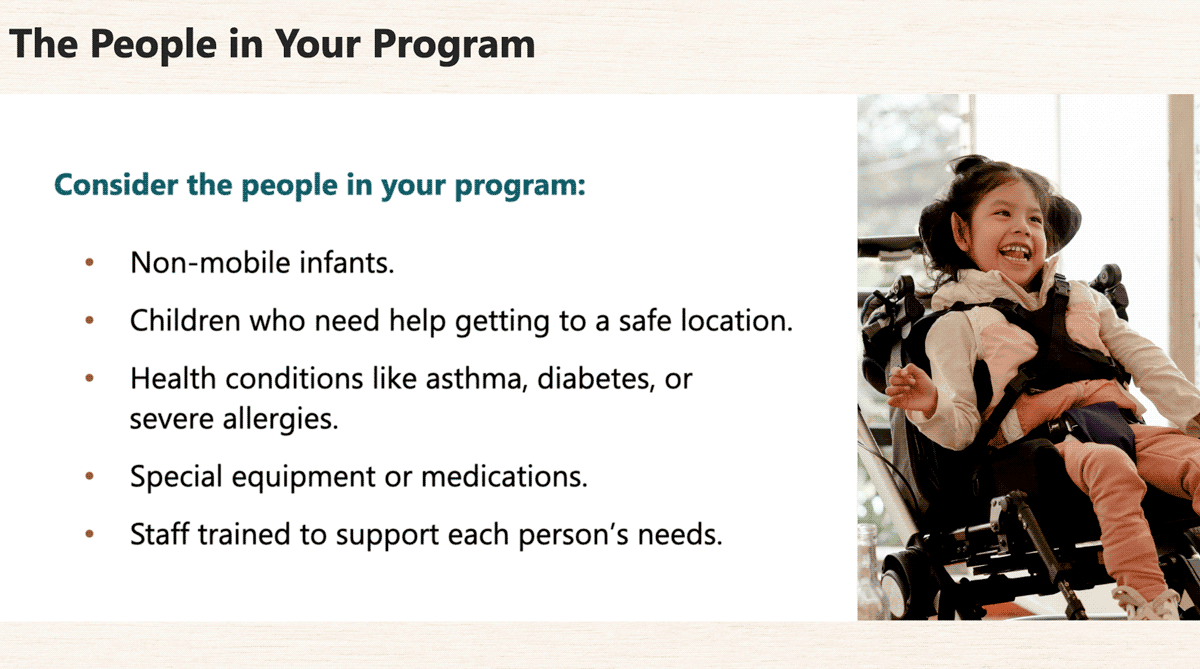
This course scaffolds complex information to build understanding gradually. We start by introducing the types of emergencies that can affect child care settings—such as natural disasters, equipment failures, or incidents involving violence. After reviewing examples of each type of emergency, the course invites learners to reflect on the hazards most likely to impact their own setting, both inside and outside the building. Once they submit their responses, we provide examples of local risks and broader threats, including chemical plants, highways, dams, and train tracks. To support planning, we offer a checklist covering water-related, construction, infrastructure, and human-made hazards. This reflection process helps providers anticipate potential emergencies and prepare calmly and confidently. We also prompt learners to consider the unique needs of the children in their care, ensuring that emergency plans prioritize safety and are adapted to each specific program. These application activities allow learners to reflect on how key concepts apply to their own settings and help bridge the gap between theory and practice, encouraging learners to think critically about how to implement new knowledge in real-world situations.
Course Highlight: Safe Environments and Injury Prevention
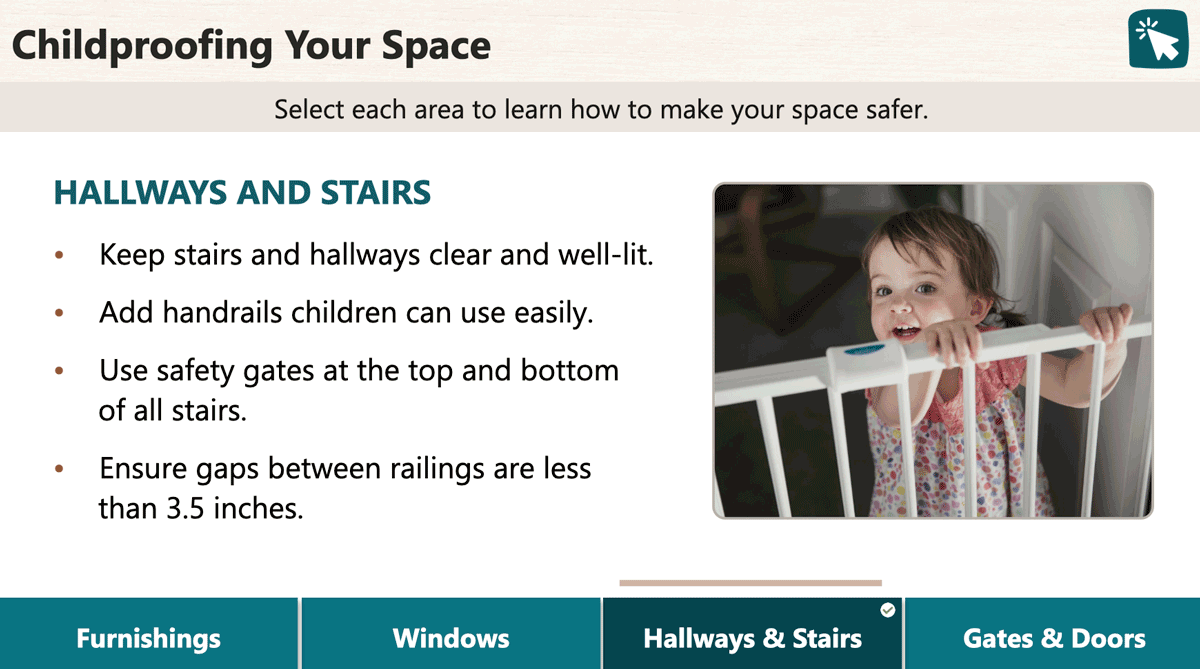
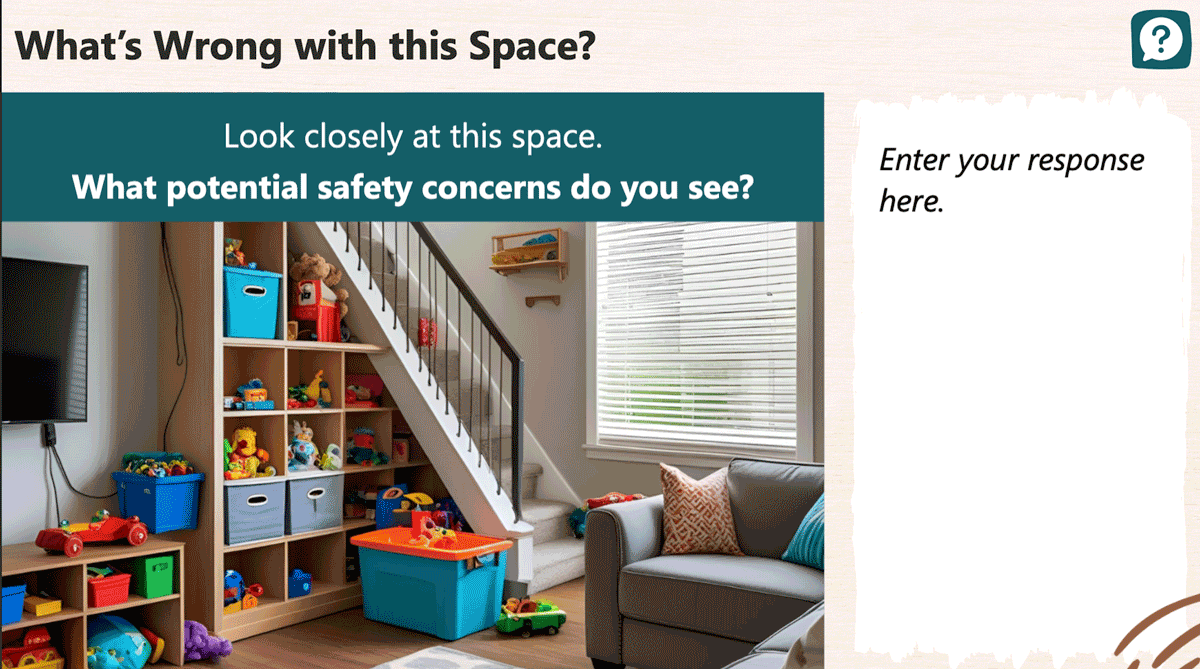
In this course, we guide learners through practical strategies for creating safer spaces and spotting risks from a child’s perspective. After introducing simple fixes to prevent injuries, we present an image and ask learners to identify potential hazards. This interactive activity provides hands-on practice in recognizing safety concerns.
Accessibility: Designing for All Learners
We hold our courses to high standards of accessibility, meeting Section 508, ADA, and WCAG 2.1 AA guidelines. Our accessibility features include:
- High-quality narration throughout each course
- Keyboard navigation, closed captions, and transcripts
- Thoughtful pacing and breaks to support learners through longer courses
- Color contrast, alt text for essential graphics, and clear and purposeful hyperlinks
Each North Dakota course runs one to three hours, so we built-in breaks to help learners maintain focus, improve retention, and reduce fatigue that can be a challenge with long courses. All narrated text and videos include closed captions, and our team added all the features listed above to support learners with visual, cognitive, or motor challenges. After establishing the accessibility features in the English version, we could fully integrate them into the Somali and Spanish versions, ensuring every provider can engage with the content without barriers.
Language Access and High-Quality Translation
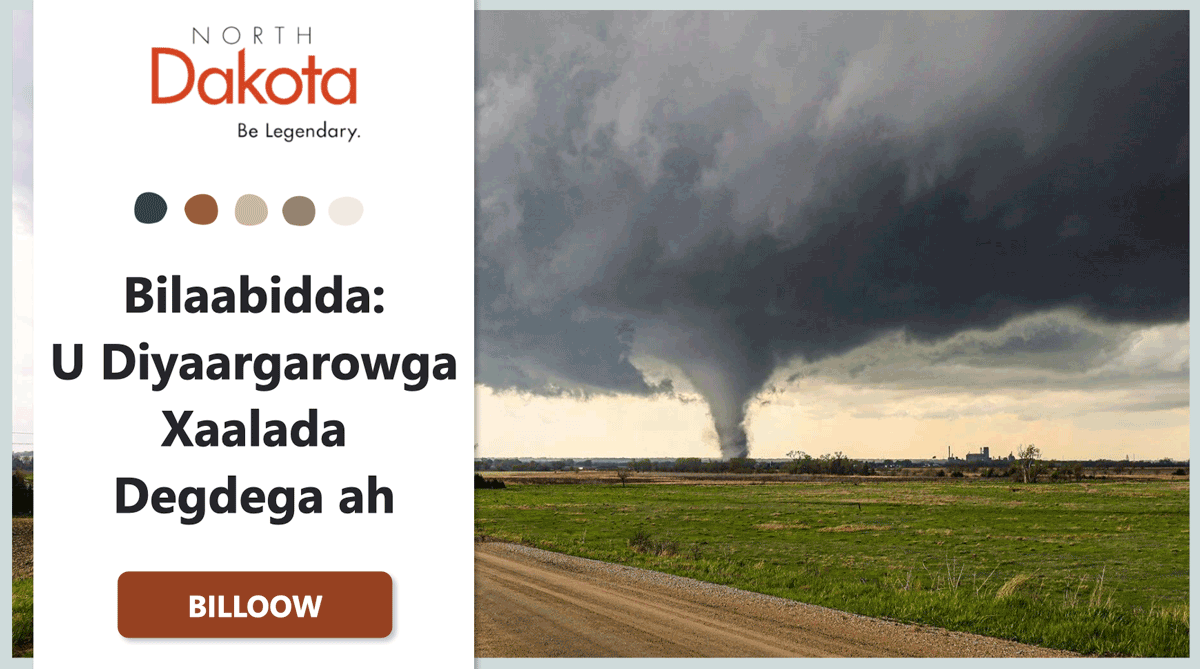
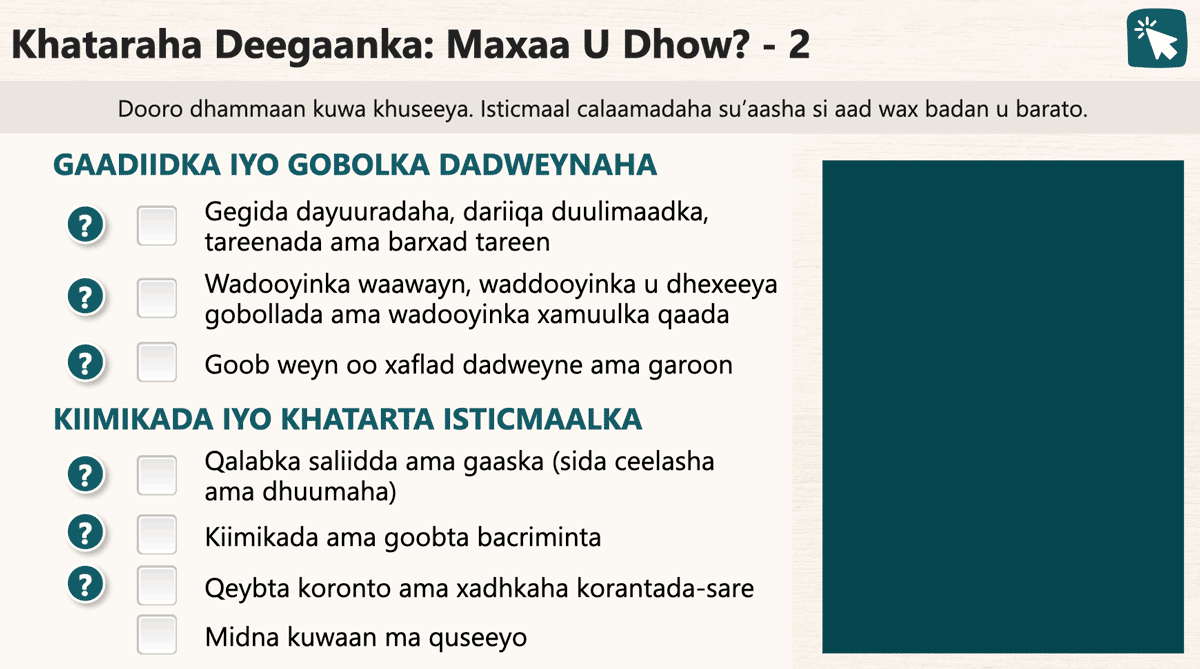
Many child care providers, especially those in home-based settings, speak languages other than English. This linguistic diversity is an asset: It means that providers reflect the diverse communities within a state and that children and families can receive care that reflects their cultural and linguistic needs.
Our partners at the North Dakota Department of Health and Human Services identified two languages besides English that are prominent in the state: Somali and Spanish. After we wrote and developed more than 27 hours of instruction in English, we developed high-quality translated versions in Somali and Spanish.
Our translation process included:
- Professional translation services for all aspects of courses.
- Internal and external Spanish reviewers who checked terminology before narration was recorded.
- External Somali reviewers who ensured accuracy and dialect alignment.
- Full integration of translated narration and text into online courses. We redesigned and reconfigured the translated courses as needed to ensure alignment with our strict design and accessibility standards.
Our internal reviewers ensure that translated content aligns with course programming and user functionality. This attention to detail helps us deliver a seamless experience for learners in all supported languages.
Why It Matters
Child care providers are a varied group: Some are new to the field; others are seasoned professionals. Some speak English fluently; others speak multiple languages. Some are navigating complex regulations for the first time. Our approach ensures that every provider can access high-quality training that prepares them to deliver safe, responsive, and developmentally appropriate care.
Whether we’re designing a course on safe sleep practices or licensing rules, our goal is the same: to empower early childhood professionals with the knowledge and confidence they need to support young children and families.
Sarah Cook is an instructional designer and content developer who strives to create inclusive learning environments, especially for learners who have historically been excluded. Her experience in education spans teaching in traditional classrooms, developing a comprehensive pre-K–12 curriculum, building a literacy curriculum as a Peace Corps volunteer leader, and designing training for AmeriCorps members and nonprofit staff.
Bethany Dusablon is an instructional designer with more than two decades of experience creating adult learning products for government and nonprofit clients, including state agencies and AmeriCorps. She has partnered with experts on diverse topics to develop dozens of online courses, eLearning modules, and webinars in multiple languages.