How the Alaska Family Engagement Center Helps Schools Build a System for Partnering with Families

For four years, the Alaska Family Engagement Center (AFEC) has been working toward a big goal: Help schools and families become genuine partners. In service of this goal, the federally funded center, operated by the Alaska Association of School Boards, has collaborated with school districts to develop trainings, resources, and activities for schools and families across the state.
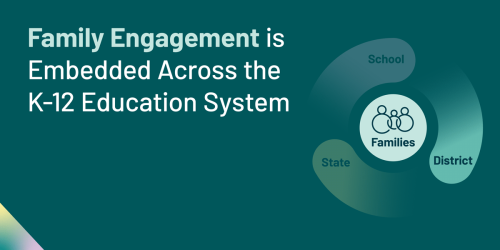
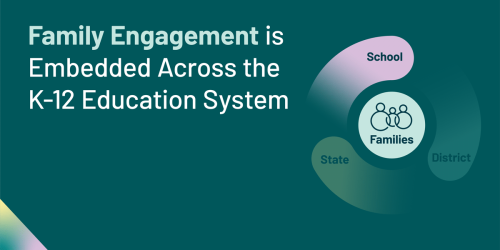
Evaluation findings from the 2025–26 school year illustrate AFEC’s progress. According to interviews and surveys with families and state, district, and community partners, AFEC has helped schools do more than host activities for families. It has helped them develop the plans, protocols, and people that make family engagement part of the standard way of doing things.
Here’s how that shift happened and what state education agencies and districts can learn from AFEC’s work.
What Family Engagement Used to Look Like
Ask district leaders in Alaska what family engagement looked like before they joined AFEC, and a common picture emerges: well-intentioned but scattered efforts. Families came to functions at school, but they typically were not engaged in a more sustained or systematic way.
We had what I would call superficial family engagement. We had families that came to parent-teacher conferences, back-to-school nights, [and] concerts. The conversation [within our school] was to help families feel they were part of decision-making processes, to authentically engage them [and] feel that they have a voice. — AFEC district partner
Another partner was equally candid: “Prior to working with AFEC, we did family nights. We did have family connections. We believed it was important … [but] no one had a real plan.”
How AFEC Moved the Needle on Family Engagement
Shifting Mindsets
AFEC training addressed how school staff members approach families, helping them adjust how they perceive family engagement. Partners described a genuine shift from involvement (families attending school-led events) to engagement (families helping shape decisions) in a two-way partnership.
What changed is how we engage our families and just asking the right questions, not telling them. We’re not going to tell you where you need help; we’re going to ask you what you need from us. — AFEC district partner
Tailoring Professional Development
Professional development shifted to formats designed for busy educators, such as Community Cafés and Coffee Chats, where district and school personnel network and trade solutions. One partner praised these events as “an accessible way to learn about a topic and hear from others.” Partners valued the chance to hear how communities across Alaska, including villages and remote areas, were solving similar challenges.
Prioritizing Family Engagement
AFEC kept family engagement at the top of the agenda through accountability and follow-up documents with real due dates attached. For example, AFEC and schools collaboratively set target dates for developing a schoolwide family engagement plan, and then AFEC checked in around those due dates. “AFEC helped us bring [family engagement] back as a hot topic in our district … it’s on the list of important things again,” one partner said.
Building Durable Infrastructure
Several district partners described building durable infrastructure for family engagement: districtwide plans, building-level policies, shared frameworks, and common protocols. They mentioned creating districtwide communication strategies, using online registration portals to improve family access, and writing family engagement directly into school action plans. In one district, an AFEC-supported convening became “a rally point” for drafting a districtwide family engagement plan, which school-site advisory committees used as a guide to develop building-level family engagement policies.
AFEC built intention into [it] … Now we have an actual long-term plan. Now we have a purpose and a clear goal behind every event that we have. Our communication is intentional … We have these protocols we follow. — AFEC district partner
Informal infrastructure also matters. Partners described using AFEC frameworks for coaching, adopting shared protocols for family nights, and developing common language that gives their family engagement efforts continuity when staff turnover inevitably occurs. One district partner said of the protocols that AFEC provided: “Those protocols were game changers for us.”
Developing School Resources
In addition to frameworks and protocols, AFEC designed and provided host school sites with comprehensive toolkits to facilitate family reading nights, including structured materials, activities, and guidance for hosting. These events help schools meet family engagement standards under the Alaska Reads Act, while supporting families and students to build literacy practices.
Building Local Capacity
Finally, AFEC did not just provide links to resources or scroll through slide decks; they built staff capacity to engage families. Partners described using what they learned from AFEC to coach other school and district leaders. Principals who participated in AFEC-supported activities grew confident enough to facilitate similar activities themselves. A state education agency partner shared that the Stronger Together framework is “often the first piece of literature I point our Alaska district and school leaders toward” as both a starting place and an ongoing reference.
Looking to the Future
The throughline is clear: Family engagement in Alaska is moving from a calendar of events to a system with plans, protocols, and people who carry it forward. Partners at the state education agency indicated that AFEC plays a critical role in providing training and connections that the state has come to rely on and for which the agency does not currently dedicate funding.
We don't have any dedicated family engagement people, and [AFEC’s] whole role is family engagement. So it kind of makes sense that they've been leading it. – State education agency partner
With so much capacity and family engagement infrastructure built during the first four years of the grant, AFEC has accomplished a great deal, which is cause for celebration.
Five years is a short time … and to see real change happen, I think it takes longer. So I hope that [AFEC] is around for the foreseeable future in supporting our schools, our families, and that community partnership. — AFEC district partner
What States and Districts Can Learn from AFEC
State education agencies and districts can learn from the systemwide shift taking place in Alaska. Here are some key actions to apply in your own context.
Offer Robust Training and Co-Planning
Training remains AFEC’s most in-demand service. In open-ended responses, 39 percent of surveyed staff members asked for more training, and many wanted AFEC as an active planning partner. Consider train-the-trainer systems that build capacity, as well as professional development focused on shifting mindsets from family involvement and toward family engagement.
Provide Concrete Tools for Family Engagement
Many district leaders and staff members already understand why family engagement matters; they want to know how to do it effectively. Share toolkits, protocols, and examples from other districts. Include scripts and practical solutions. AFEC staff member feedback suggested that some tools can be “too much” for a new educator to pick up and implement. Consider the complexity of the resources that you curate for staff members and choose those that include facilitator guides, ready-made handouts, and family activities that can be adapted for multiple contexts (e.g., ages and subjects). Check out these resources from AFEC for ideas.
Keep Family Engagement on the Agenda by Sharing
When educators face competing demands, it is easy for family engagement to diminish as a primary goal. Keep family engagement at the forefront by facilitating ongoing networking for districts and schools to share their strategies and learn from one another. Regularly share tools, tips, and strategies in district communications and with school leaders.
Build Family Engagement Into District and School Infrastructure
AFEC planned with and supported districts and schools to build infrastructure for family engagement, including districtwide plans, building-level policies, shared frameworks, common protocols, communication strategies, online registration portals, and school action plans. When genuine family engagement is part of every planning process, it becomes the “way we do things” rather than “one more thing.”
Rebecca Merrill is a senior researcher at Education Northwest. She specializes in mixed-methods research and finding ways for quantitative and qualitative data to “talk” to and inform each other. A former educator, Rebecca has specific interest and expertise in the teacher labor market, including recruitment, preparation, and retention.
Rachel Maller is a senior researcher who collaborates with partners to use data and evidence to inform decision making in education. She specializes in conducting high-quality research and transforming it into actionable, relevant deliverables. Her expertise spans a range of topics including apprenticeships, college and career pathways, and student and teacher well-being.