What Happens in Vegas Comes Back to Limitless: Takeaways from NCAN
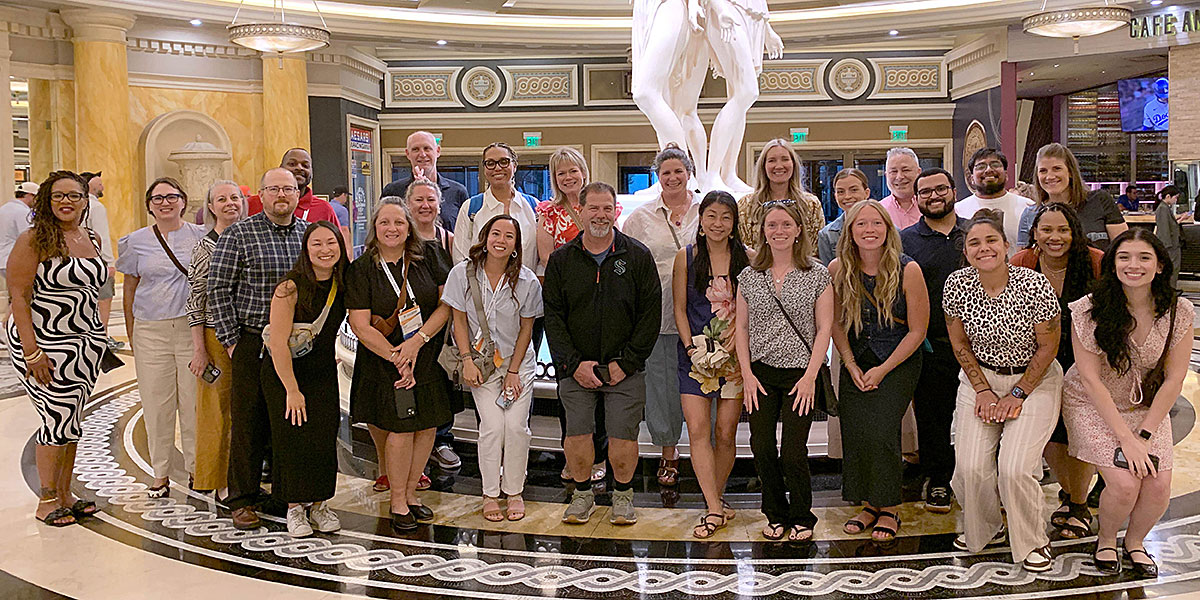
In early October, Education Northwest joined colleagues from the Gates Foundation and Washington Horizons partnerships at the 2026 National College Attainment Network (NCAN) Conference in Las Vegas. Nearly 1,500 people were in attendance: high school and college advisors as well as representatives from community-based organizations, state and federal agencies, foundations, and other organizations from across the country. This year’s theme invited us to go “ALL IN on College Access” and “bet on bigger ideas and better outcomes.”
Across formal presentations and informal conversations with colleagues, five takeaways stood out as particularly relevant to the work we have seen and supported through the Limitless Learning Network this year. It was encouraging to see how closely the conversations happening nationally align with Limitless priority areas.
Below we share what Limitless partnerships can learn from college access and success efforts nationwide.
1. Student Voice: Go Beyond Participation and Ask Students to Shape the Work
Several NCAN sessions reinforced the importance of not positioning students as passive recipients of programs, policies, and curricula, and instead purposefully involving them in decisions that affect their educational experiences. For example, the Hawai’i Community Foundation shared how they partnered with the Gardner Center to engage college students as researchers, training them to interview their peers and develop recommendations to improve postsecondary access and success. Rather than simply asking students for feedback, this initiative gave them an active role in identifying challenges and shaping solutions.
Relevance to Limitless
Student perspectives can help partnerships better understand what is working, identify challenges that may not be apparent in the data, and develop more responsive approaches.
Many Limitless partnerships already incorporate student voice into their work. For example, in February, Partnership 6 held focus groups with more than 40 Spanish-speaking and bilingual students and community members to learn about their experiences navigating the transition to college. Five themes emerged: the importance of trusted relationships in college decision-making, students’ reliance on self-navigation and online information, anxiety related to financial aid and complex systems, the role of belonging and community identity, and the need for stronger family engagement and bilingual communication. These findings helped shape the partnership’s priorities for the 2026–27 academic year, including their recent staff training forum where partnership members explored the focus group findings and discussed the facilitator’s recommendations in detail. Partnership 6 shared that it "was an excellent morning of connection, and we are hopeful that it will lead to ongoing, sustainable collaboration that will ultimately benefit students."
Building on efforts like these, partnerships can continue to expand students’ roles beyond providing feedback to include collecting data from peers, interpreting findings, and identifying priorities and solutions.
Put Into Practice
The upcoming Limitless fall convening will provide an opportunity for partnerships to put this into action. During the Student Conversation Hour at Heritage University, we will hear directly from students about their educational journeys and aspirations. Consider what you want to learn from these conversations and how student perspectives might inform your partnership's work. Beyond the convening, think about how students could play a more active role in shaping partnership decisions and improvement efforts.
2. Continuous Improvement: Leverage What You Have Before Building Something New
With limited resources and competing priorities, it's worth taking stock of what we already have before developing new programs, tools, or processes. Presenters from Green Bay Area Public Schools and DeliverED shared how they used existing student survey information and Free Application for Federal Student Aid (FAFSA) completion data to identify students who might need additional support to complete the application. The partners tested changes to existing practices, including regular FAFSA check-ins and more consistent use of senior survey data. During the improvement effort, the district’s FAFSA completion rate increased by 5 percentage points. The partners also identified areas needing further attention, including uneven staff availability and gaps in survey participation, and used those findings to guide next steps.
Relevance to Limitless
Partnerships already have access to valuable data, relationships, and promising practices they can build on. Partnership 1 (Chelan County), for instance, drew on existing dashboards from the Washington State Education Research and Data Center, FAFSA support resources, and approaches from other Limitless regions (including Renton's data-sharing agreement) to inform improvements in advising, communication, and dual credit mobility. This illustrates how partnerships can make more intentional use of existing resources and learn from one another rather than starting from scratch.
Just as important is being open to what the data tells us, even when results differ from what we expected. Those findings can help partnerships identify where to adjust their approaches and what to try next.
Put Into Practice
During the Meaningful Dual Credit and Team Time session at the fall convening, partnerships will review statewide postsecondary data and explore how dual credit opportunities align with students' postsecondary goals. As you examine the data, consider which existing practices could be strengthened or better coordinated. Is there a small change your partnership could test? What additional information would help you understand whether that change is making a difference?
3. Sustainability: Build on Partnerships That Make the Work Possible
Sustainability was a recurring topic at NCAN, particularly because attendees are navigating uncertain funding and changing policy environments. One especially relevant reminder for Limitless partnerships was that sustaining progress requires more than securing additional funding; it also means maintaining the relationships, shared responsibilities, and institutional commitments needed to continue the work.
One example came from AZ Comeback. The initiative brings together Arizona’s three public universities to help students who left college without a degree to return and finish their credentials. Presenters described how dedicated coaches, coordination across university departments, and changes to institutional policies have helped returning students navigate financial barriers, advising, and re-enrollment. The presenters also discussed efforts to strengthen data systems and identify longer-term funding approaches for coaching and scholarships.
Relevance to Limitless
Like AZ Comeback, Limitless partnerships bring together organizations with different roles, resources, and responsibilities to support students. Many are already laying the groundwork for sustainability by strengthening how they work together. For example, Partnership 4 reported that its Limitless work helped clarify partner roles, streamline communication, and establish more consistent advising and dual credit workflows. These kinds of changes can make collaborative practices part of regular operations rather than activities dependent on individual staff members or grant funding. As Limitless enters its final grant year, partnerships have an opportunity to consider not only what they have accomplished, but what it will take to continue making progress.
Put Into Practice
Sustainability is central to this year's fall convening, including a Community Café session dedicated to the topic. Come prepared to identify two or three practices your partnership most wants to continue beyond the grant. What makes those practices valuable? Who will lead the work? What resources and relationships are needed? Use conversations with other partnerships to explore approaches that might work in your region.
4. Well-Being: Sustaining Work Also Means Sustaining People
Several NCAN sessions addressed a question that deserves more attention in college access and success work: How do we support the people who support students? Presenters discussed the pressures facing college access professionals as they navigate FAFSA changes, shifting federal and state priorities, and growing demands on their time. They shared approaches to supporting staff well-being, including peer connections, shared problem-solving, clearer communication, and more realistic expectations around workloads. The emphasis was not on helping people manage stress but making the work itself more manageable.
Relevance to Limitless
Regional partnerships depend on people who often balance multiple responsibilities across organizations. Supporting their well-being requires looking at how the work is organized, not just how individuals manage it. For example, distributing responsibilities across team members, documenting processes so knowledge is not concentrated in one person, and making space for peer learning can reduce the burden on individuals while strengthening the partnership as a whole.
Put Into Practice
At your next partnership meeting, ask: What is one thing we could simplify, stop doing, or share differently to make this work more manageable? Consider whether there are tasks or responsibilities that could be better coordinated across partners. As you plan for sustainability, include the capacity and well-being of the people doing the work in those conversations.
5. Policy Connections: Make Local Data and Student Stories Count
Partnerships have valuable knowledge about what students need, where systems are working well, and where policy changes could make a difference. Several NCAN sessions offered practical examples of how to bring that knowledge to policymakers. In one session, leaders from College Possible's Minnesota and Texas organizations shared how they use student outcomes and local data to engage state legislators. While their approaches reflect different political and policy environments, a common lesson was the importance of understanding policymakers' priorities and making a clear, evidence-informed case for action. Data on college access and success may be especially compelling when connected to issues such as workforce development, affordability, or economic opportunity.
Relevance to Limitless
Regional partnerships are well positioned to connect policy with what is happening in schools, colleges, and communities. These kinds of local results can help policymakers understand what is possible through cross-sector collaboration and where continued investment or policy support may be needed. Combined with student and practitioner perspectives, local data can help partnerships make a stronger case for policies that expand postsecondary opportunities.
Put Into Practice
Identify one issue your partnership understands particularly well. What do your local data show? What have students and practitioners experienced? What policy or practice change could help? Consider how you might use that information to start a conversation with a local or state policymaker, whether through a meeting, a short briefing, or an invitation to see your work firsthand.
Bringing It Back to Limitless
Many of the ideas we heard at NCAN are already taking shape across the Limitless Network. When we gather at Heritage University next week we will have an opportunity to learn from students and local leaders in South Central Washington, share approaches across partnerships, and consider how to sustain the work beyond the grant. The convening's focus on regional context, connection, and sustainability offers a chance to put these takeaways into practice while learning from the experiences and priorities of our host region. We hope you'll bring your own questions, experiences, and ideas to those conversations.
Amy Marcetti is a senior researcher with more than 15 years of experience leading research, evaluation, and institutional improvement initiatives across higher education and nonprofit settings. Based in Washington state, Amy is especially interested in research and evaluation work that responds to community needs and promotes equitable educational opportunities across the Pacific Northwest.
Mary Padden is a senior researcher who specializes in family engagement and participatory research. She believes that authentic collaborations between schools and families are essential to the well-being of students and communities. Based in Seattle, she is passionate about humanizing, community-engaged research that disrupts the status quo and advances justice.
Abigail Shade specializes in leading and coordinating cross-sector networks that build coordinated systems of support across the educational ecosystem. Based in Tacoma, Washington, she is committed to advancing a more just and inclusive education system where postsecondary education is accessible and affordable for all students.