Student Parents Need More Than Programs; They Need Connected Pathways
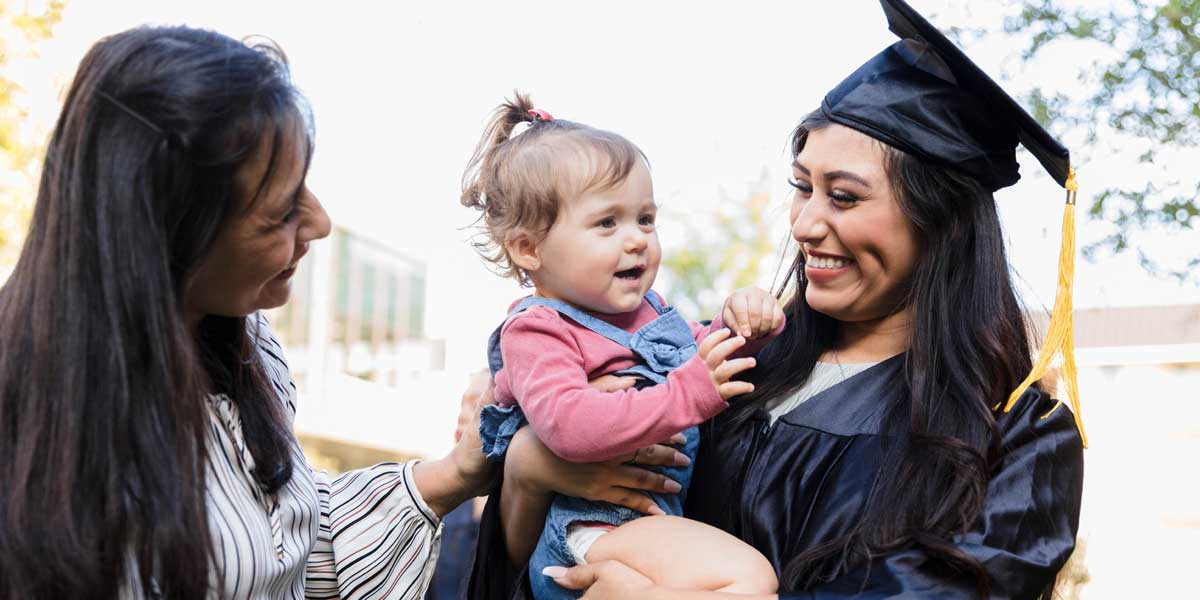
September is National Student Parent Month, a time to recognize the millions of students working toward their diploma, degree, credential, or certification while balancing coursework, caregiving, and more.
Student parents are often described by what they lack: time, resources, or support. Yet every day they demonstrate their determination, adaptability, and commitment to building a better future for their families. The challenge is not motivating student parents, but designing our education and workforce systems to support them.
The challenge is not motivating student parents, but designing our education and workforce systems to support them.
Too often, parenting students experience a series of disconnected services across their educational and career pathways. Programs available in high school may not be available after students transition to community college or an apprenticeship. A college student may find childcare assistance at their institution but lose access when they begin workforce training or seek employment after graduation. Although many of their needs are consistent over time, the systems are disjointed. Every transition means having to rebuild relationships, resources, and momentum.
How do we keep parenting students connected to people, resources, and opportunities throughout their entire educational and career journey?
Envisioning Cohesive Education and Workforce Pathways for Parenting Students
Parenting students need connected pathways, supported by strong relationships, that follow them across systems: from secondary school to postsecondary education and on to workforce training and work. Fortunately, there are existing opportunities for programs, communities, and policymakers to streamline support across student experiences.
Parenting Students at the Center of Design and Decision-Making
Parenting students are experts in their own lives. They understand the realities of managing childcare schedules, transportation challenges, financial pressures, and academic obligations. But often systems are designed around assumptions about what student parents need (if their needs are even considered) rather than engaging them as partners in designing solutions.
A learner-centered approach means involving parenting students in decisions about academic pathways, support services, scheduling, career-connected learning, and career planning. When parenting students have voice and agency, programs across the education and workforce spectrum become more responsive and more effective.
Interconnected with student parents’ decision-making is structural flexibility in scheduling, timelines to reach milestones, or differentiated support options. Without these flexible options, student parents lack meaningful choice in pathways toward their goals.
Knowledgeable, Skilled Staff Help Navigate Education and Workforce Systems
Every parenting student deserves access to trusted professionals who can help them navigate educational and workforce systems. These may be school counselors, college advisors, workforce navigators, coaches, apprenticeship coordinators, mentors, or staff members. Regardless of title, they play a critical role in helping student parents understand options, solve problems, and stay connected during transitions.
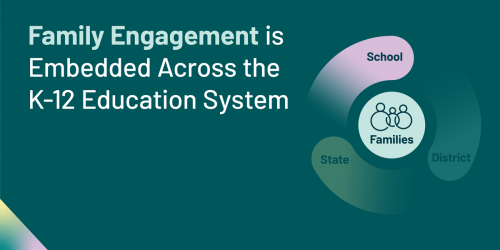
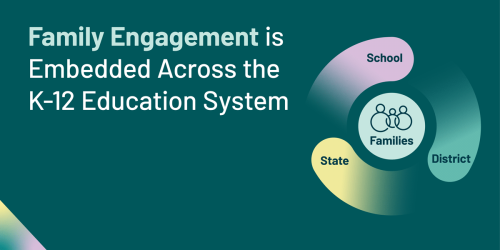
Navigating transitions requires specialized knowledge about the complex systems and intersectional identities of parenting students, visualized in Urban Institute’s Student-Parent Families at the Center Systems Framework. Navigators must understand financial aid, childcare resources, public benefits, workforce development programs, apprenticeship opportunities, and career pathways. They must also be equipped with trauma-informed and relationship-centered practices that acknowledge the realities many student parents face. Across education and workforce systems, program staff need shared foundational knowledge on these topics.
Warm Handoffs Between Institutions, Organizations, Employers, and Community Partners
Student parents often experience nonlinear educational pathways. A student may pause enrollment when a child is born. A young parent may complete high school, enter the workforce, and later return to earn a certificate or degree. Another may move between college, apprenticeships, and employment as family circumstances change. These moments require more than referrals. They require warm handoffs.
Warm handoffs occur when schools, colleges, workforce organizations, employers, and community partners intentionally coordinate support. Instead of asking student parents to start over each time they enter a new system, institutions share information, communicate directly, and help transfer trusted relationships. These practices preserve trust and reduce the likelihood that parenting students become disconnected during moments of transition.
Instead of asking student parents to start over each time they enter a new system, institutions share information, communicate directly, and help transfer trusted relationships.
Wraparound Supports for Parenting Students
Fundamental basic needs such as transportation, childcare, housing, food security, healthcare, technology access, and financial stability all influence whether a parenting student can participate fully in education or training opportunities. The most effective systems do not treat these needs as separate from learning. Instead, they integrate wraparound supports directly into pathway design.
Wraparound supports should center the needs of both parenting students and their children, such as in Aspen Institute’s 2Gen Approach. To ensure that supply meets the needs of parenting students, wraparound supports can come from partnerships across sectors, including community-based organizations, health and human services agencies, childcare agencies, housing authorities, and more.
How to Connect Pathways for Parenting Students
Transforming systems to meet the needs of parenting students across education and workforce pathways looks like:
Cross-sector, cross-system partnerships focused on parenting students.
Establish formal partnerships among K–12 schools, colleges, apprenticeship programs, employers, workforce agencies, community-based organizations, and social service providers that expand access to learning, employment, mentoring, and supportive services.
Resources that follow families through transitions.
Incentivize multisite, multisector partnerships by establishing funding mechanisms. Ensure these funding opportunities incentivize providing support across education to workforce pathways and meeting parenting students where they are.
Timely, actionable, and linked data on parenting students.
Build robust, multisector integrated datasets that can begin to paint a more holistic picture of student parents’ experiences as they progress in their education. Include information on parenting students’ access to wraparound services, academic progress, and outcomes.
Policies grounded in the lived experience and aspirations of parenting students.
Include parenting students in policy decisions across institution, system, state, and federal levels. Prioritize parenting students in policy through strategic planning, funding for strong data systems, and dedicated resources for wraparound services, staff professional development, and coordinated warm handoffs.
Looking Ahead
Student Parenting Month is an opportunity to celebrate the determination of parenting students. It is also a reminder that persistence should not depend on individual resilience.
When we build relationships and supportive infrastructure across secondary education, postsecondary education, apprenticeships, and workforce pathways, we create conditions where parenting students can thrive. The goal is simple but powerful: no parenting student should have to navigate education, training, and employment alone.
By investing in relationships, coordination, and continuity across systems, we can help student parents achieve their goals while creating brighter futures for the children and families who are counting on them.
Explore More Education Northwest Resources
Supports for Parenting Students
- Removing Barriers and Creating Pathways to Postsecondary Success: Supporting Parenting Students, part of the evaluation of the ECMC Foundation Parenting Student Success Initiative (formerly the Single Mother Student Success Initiative)
- Resources For Addressing Basic Needs Among Parenting Students
Improving Connections Between Systems
- Resources from the Limitless Learning Network, a network of 26 regional partnerships working to improve postsecondary transitions across Washington state
- Using Research to Connect Apprenticeship and Higher Education with the William D. Ruckelshaus Center
Meeting Students’ Basic Needs
- Helping College Students Thrive with Basic Needs Services and Resources, evaluation of the ECMC Foundation Basic Needs Initiative
Reengaging Students (Secondary and Postsecondary)
- Effective Program Features and Practices for Reengaging Young Adults, supported by the Annie E. Casey Foundation
- Reducing Barriers to Learning for Students: Open Doors Youth Reengagement Summer Pilot Evaluation, overseen by the Washington State Office of Superintendent of Public Instruction
- California Reconnect initiative evaluation findings, an initiative of InsideTrack
Ashlie Denton is a managing researcher with expertise in alternative education, STEM, and youth and community engagement. Thanks to her background in public affairs and policy, she analyzes complex educational challenges through a systems lens that considers how learning environments, policies, practices, and networks help and hinder student success.